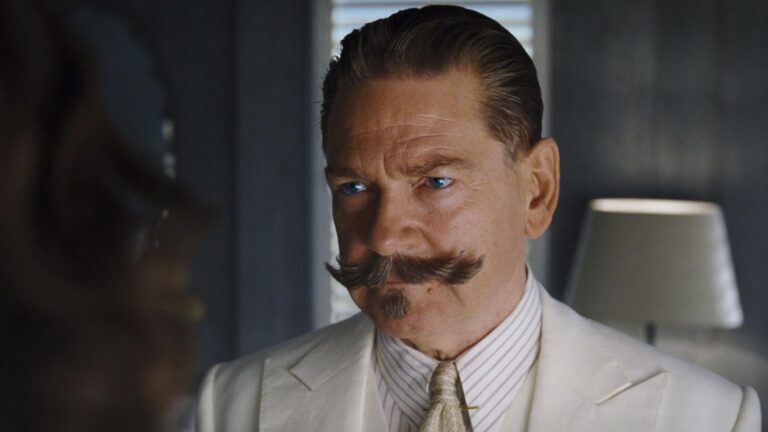
The Hollywood actor Kenneth Branagh stands as one of the most accomplished and versatile figures in modern entertainment. Actor, director, writer, and producer, Branagh has built a career that bridges classical theatre and mainstream movies with rare confidence.
From bold Shakespeare adaptations to international blockbuster movies and deeply personal storytelling, his work has left an enduring mark on British and global culture.
Born Sir Kenneth Charles Branagh on December 10, 1960, in Belfast, Northern Ireland, he grew up during a period of social and political tension known as The Troubles.
This displacement and cultural shift would later influence his most personal and acclaimed work, offering Branagh a deep emotional well from which to draw throughout his film career.
Table of Contents
Also read: Lee Pace: A 25-Year Journey of Quiet Power, Iconic Roles, and Cinematic Elegance
Early Life and Education
Branagh’s passion for acting emerged early. He found refuge and expression in performance, excelling in school drama and discovering the transformative, massive power of storytelling.
The actor’s talent gained him a place at the Royal Academy of Dramatic Art (RADA) in London, one of the world’s most prestigious acting institutions. There, Branagh quickly distinguished himself as a performer of exceptional intelligence, vocal precision, and emotional depth.
Following his graduation, the actor joined the Royal Shakespeare Company (RSC) in the early 1980s, performing leading characters in classic roles. His stage work was marked by a youthful intensity and clarity that revitalized Shakespeare for contemporary fans.
Breakthrough and Shakespeare on Film
Branagh achieved global recognition with “Henry V” (1989), which he directed and starred in at just 29 years old. The movie was praised for its raw realism and emotional urgency, earning multiple Academy Award nominations and establishing Branagh as a formidable moviemaker.
It signaled the arrival of a new voice capable of making Shakespeare cinematic, accessible, and urgent.
Throughout the 1990s, Branagh continued to adapt Shakespeare with an ambitious flair. movies such as “Much Ado About Nothing” (1993) and “Hamlet” (1996) showcased his belief that classical literature could be both faithful and thrilling.
His four-hour, unabridged version of Hamlet remains one of the most daring literary adaptations ever attempted in mainstream movie.
Expanding Range and Mainstream Success
While Shakespeare formed the backbone of his early film career, Branagh refused to be confined by genre. He expanded into literary adaptations, romantic dramas, thrillers, and eventually blockbuster film.
As an actor, he appeared in a wide range of movies, from period pieces to contemporary epics, often stealing scenes with his commanding presence and refined delivery.
In the 2000s and 2010s, Branagh became increasingly visible in major studio film productions, balancing prestige with popular appeal. His work in large-scale films demonstrated his ability to move seamlessly between intimate drama and spectacle, earning respect from both critics and international fans.

Director of Scale and Intimacy
His directing career evolved alongside his acting. He proved adept at handling large film productions while maintaining very emotional targets. His direction emphasized character, clarity, and strong performances, even within visually ambitious settings.
One of the most defining moments of his later film career came with “Belfast” (2021), a semi-autobiographical movie inspired by his childhood. Shot in black and white, the film explored family, memory, and resilience amid political unrest.
He was widely acclaimed for his warmth and sincerity, earning Branagh the Academy Award for Best Original Screenplay. The win made him the first individual to receive Oscar nominations in seven different categories across his film career.
Awards and Recognition
The actors’ contributions to film and theatre shows have been recognized with numerous honors. He has received Academy Awards, BAFTAs, Golden Globe Awards, and Emmy Awards, reflecting excellence across acting, directing, and writing.
In the year of 2012, he was knighted for services to drama, becoming Sir Kenneth Branagh. His legacy is further cemented by honorary degrees and leadership characters within the British arts community.
Theatre and Cultural Leadership
Despite his huge success in movie, Branagh has never abandoned the stage. Theatre remains central to his artistic identity. Over the decades, he has returned repeatedly to live performance, reaffirming his belief in its immediacy and power.
Beyond his performance, he has roled a significant character in shaping future generations of actors. He served as President of RADA, advocating for rigorous training, artistic discipline, and respect for classical craft in a rapidly changing industry.
Personal Life
His personal life has occasionally drawn people’s attention, particularly his earlier marriage to actress and screenwriter Emma Thompson, with whom he collaborated on several projects. Since 2003, he has been married to Lindsay Brunnock, and the couple maintains a relatively private life away from the spotlight.

Legacy and Continuing Influence
Kenneth Branagh is regarded as a rare artist who thrives across eras, styles, and media. The actor’s film career reflects a balance of tradition and reinvention—honoring classical foundations while embracing modern storytelling forms.
Whether adapting Shakespeare, directing large-scale movies, or crafting deeply personal narratives, Branagh continues to shape international cinema with intelligence, emotional honesty, and technical mastery.
As his work evolves, one truth remains clear: he is not merely a performer or filmmaker, but a cultural bridge—connecting the past and present, stage and screen, art and audience. His influence will continue to resonate for generations to come.
FAQs
1. Who is Kenneth Branagh best known for?
Kenneth Branagh is best known for his work as an actor, director, and writer, particularly for bringing William Shakespeare’s plays to the big screen. This actor is also widely recognized for directing major films like Thor, Cinderella, and Belfast, and for portraying Hercule Poirot in multiple Agatha Christie adaptations.
2. Has Kenneth Branagh won an Academy Award?
He won the Academy Award for Best Original Screenplay for Belfast (2021). The actor is also historically significant as the first person ever nominated for Oscars in seven different categories, including acting, directing, writing, and producing.
3. What are Kenneth Branagh’s most famous movies?
Some of his most famous films include Henry V, Much Ado About Nothing, Hamlet, Thor, Cinderella, Murder on the Orient Express, Death on the Nile, A Haunting in Venice, and Belfast. His career spans Shakespearean drama, blockbuster movie, and personal storytelling.
4. Is Kenneth Branagh trained in theatre?
He is classically trained and studied at the Royal Academy of Dramatic Art (RADA). He began his film career with the Royal Shakespeare Company, which strongly shaped his acting style and directorial approach. Theatre remains a central part of his artistic identity.
5. Is Kenneth Branagh still active in film and theatre?5. Is Kenneth Branagh still active in film and theatre?
The actor remains highly active in both film and theatre. He continues to act, direct, and return to the stage while also developing new film projects. His recent and upcoming work confirms his ongoing influence in global cinema and classical theatre shows.
Also read: Kenneth Branagh